Posts

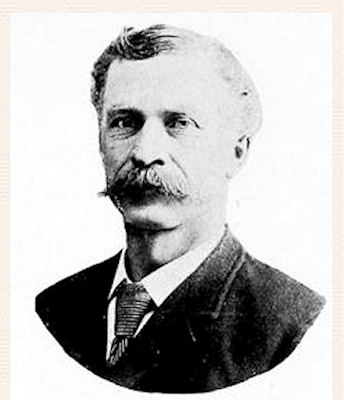
Rufus J. Richardson

Image
  “Hello, is this Ed Pitts?”   “Yes, it is. Who’s calling.”   “This is Joe Reeder. I have a camp near the Stillwater Reservoir. Does the name Reeder or Richardson mean anything to you?”   “I can’t say for sure. Richardson rings a bell but I’m not sure I can place Reeder.”   “Thought so. I’m calling because I read your book on the Beaver River and I’m surprised that you didn’t mention my camp. I believe it’s probably the oldest continuously occupied camp in the whole Beaver River area.”   “Really? I’m sorry, Joe. I remember now that Terry Perkins once told me I should investigate the history of your camp, but I never got around to it. To be honest, I had the impression that it was just a typical hunting camp. I’d be very happy to look into the history of your camp and, with your permission, write about it on my blog.”   “Why don’t you come up to visit? I’m at camp right now. I’ll be here through the first week of November.”   A week later, with my ...

Magneto Telephones

Image
So far as I can tell, the first documented telephone service in the Beaver River country started in 1891 when William Morrison, a Lowville druggist, financed a telephone line to connect the Smith’s Lake Hotel that he owned at today’s Lake Lila with his store in Lowville. This allowed guests arriving in Lowville by train to alert the hotel and allowed the hotel to order supplies from town. Even given the significant cost, the phone line must have been a welcome improvement. Since the railroad through Beaver River did not yet been exist, a trip to town took at least two arduous days by boat and wagon. Morrison’s telephone connection functioned like an intercom. The wire was only able to connect two telephones. Such systems were popular despite this limitation. They were commonly used to connect businesses to one another, or to connect a person’s business to their home. The signal could carry over long distances making it practical in many applications. The draw-back was that every pair o...

Stories from Etta Kempton’s Journal, Part 4 – Gladys, Beaver River Teenager

Image
  Gladys in the doorway of the Beaver River Station Try to imagine the life of a teenage girl in Beaver River in the early nineteen teens.  There was no school there at the time and consequentially no school sports or other school activities. There was no telephone, so the only way to communicate with friends and family was face-to-face or by letter. There were no automobiles, so the only way to travel was by walking, horse and buggy or railroad. Popular music was supplied by a wind-up Victrola playing a small stock of 78 rpm records. There was no radio. Television and the internet had not even been imagined. In short, there were none of the things that teenagers take for granted today.    Such was the world of Gladys Kempton. Gladys was seven years old when she moved to Beaver River Station in 1905 with her mother and father. She had been born on August 14, 1898, presumably on Etta’s parents’ family farm outside of North Bangor near the town of Brushton, St. Lawrenc...

Roads in the Beaver River Country

Image
Detail from Eddy map in 1876 Wallace Guide to the Adirondacks Although there is no road connection to the settlement of Beaver River today, quite a few roads once existed in its vicinity. Most were used for a decade or less and can no longer be located except on old maps. These early “roads” were no more than a wide path cleared through the forest that could be used by a slow-moving horse and wagon. As for historic public roads, the successors of two of the oldest roads are still in regular use today: the Number Four Road from the Black River to the settlement of Number Four and the Stillwater Road from there to the reservoir. Another segment of the Carthage-to-Lake Champlain Road, now called the Six-Mile Road, connects to the one mile long Grassy Point Road leading into downtown Beaver River. These two public dirt roads can only be reached by crossing the reservoir by boat, barge or snowmobile.   What follows is a list of all the known roads in the Beaver River area along with the...

Stories from Etta Kempton's Journal, Part 3 - Will's day

Image
According to his grandson Donald Thompson, Will Kempton began his life-long railroad career by working on a section gang based in Chicopee Falls, Massachusetts. At the time, this was a thriving mill town on a tributary of the Connecticut River adjacent to the city of Springfield, a railroad hub. Will later worked on a section gang of the Adirondack Division of the New York Central Railroad based in Childwold, NY., a short-lived station that opened in 1893. The exact dates of these jobs are unknown. Will may have tried farming first because by the time he went to work on the railroad he was probably already in his 20s. Will married his N. Bangor, NY neighbor, Etta Wagner in 1897. Their child Gladys was born the next year. While Will was temporarily working away from home, his new wife and their infant daughter, Gladys, continued to live on the Wagner farm in N. Bangor. Then, about 1905 Will got the section foreman’s job at Beaver River Station and moved there with Etta and young Gla...